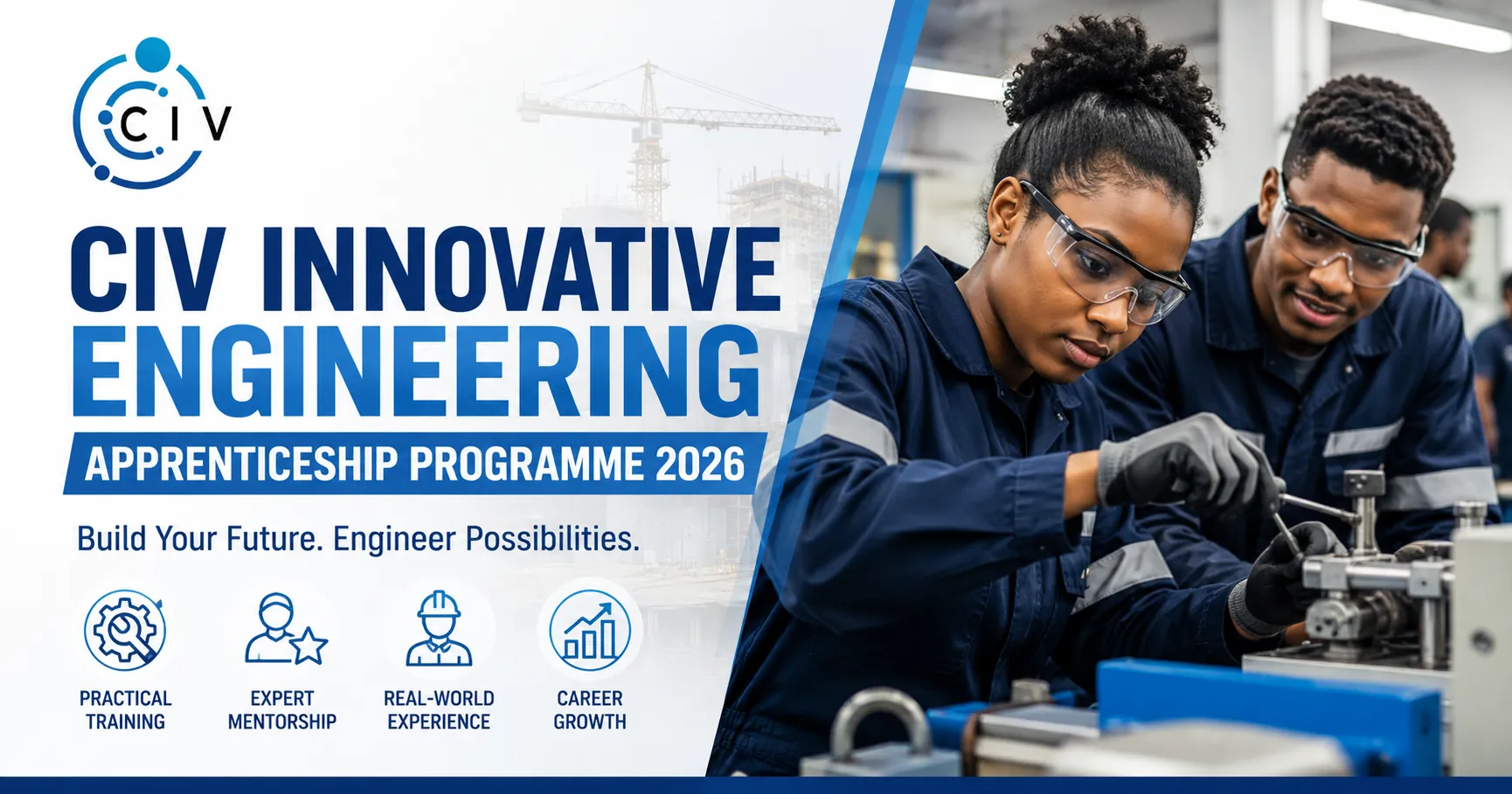
The CIV Innovative Engineering Apprenticeship Programme 2026 offers aspiring artisans and engineering professionals an opportunity to gain practical workplace experience while completing structured technical training. Apprenticeships remain one of the strongest pathways into South Africa’s engineering sector because they combine classroom learning with real-world industry exposure.
If you are passionate about becoming a qualified artisan, this programme could be your first step toward a rewarding career in engineering, manufacturing, infrastructure development, and construction.
Engineering remains one of South Africa’s most in-demand industries, with skilled artisans continuing to play a vital role in economic growth, industrial development, renewable energy projects, mining, logistics infrastructure, and manufacturing.
Whether you’re finishing Grade 12, studying at a TVET College, or holding an N2 or NC(V) qualification, this apprenticeship provides valuable experience that employers across South Africa actively seek. Structured engineering apprenticeships remain one of the most reliable routes into permanent employment because they allow candidates to earn workplace experience while developing nationally recognised technical skills.
Focus Keyphrase
CIV Innovative Engineering Apprenticeship Programme 2026
Programme Overview
| Programme | CIV Innovative Engineering Apprenticeship Programme 2026 |
|---|---|
| Opportunity Type | Apprenticeship |
| Industry | Engineering |
| Location | South Africa (See official advert) |
| Employment Type | Apprenticeship |
| Closing Date | Apply as soon as possible (Refer to official advertisement) |
| Experience | Entry Level |
| Suitable For | Unemployed South African Youth |
About the CIV Innovative Engineering Apprenticeship Programme 2026
The programme has been developed to prepare future engineering artisans through structured workplace learning and practical technical experience.
Unlike ordinary internships, apprenticeships focus on developing occupational competence that eventually leads to artisan qualification after completing the required workplace hours, theoretical modules and trade testing requirements.
Participants work alongside experienced professionals while learning how engineering projects are planned, executed, maintained and inspected.
Engineering apprenticeships continue to be among the most respected career pathways because qualified artisans remain in demand across several industries, including:
- Civil Engineering
- Construction
- Manufacturing
- Mining
- Infrastructure Development
- Petrochemical
- Renewable Energy
- Heavy Industry
- Municipal Infrastructure
These sectors depend on skilled artisans to build, maintain and repair South Africa’s critical infrastructure.
Minimum Requirements
Applicants are generally expected to possess relevant technical qualifications.
Typical requirements may include:
- South African citizen
- Grade 12 (Matric)
- Mathematics
- Physical Science
- Engineering subjects (where applicable)
- N2 Engineering qualification or equivalent
- Relevant NC(V) qualification
- Willingness to complete practical workplace training
- Good communication skills
- Ability to work safely in industrial environments
Always refer to the official advertisement for the exact requirements before submitting your application.
Key Responsibilities During the Apprenticeship
Successful apprentices may be expected to:
- Assist qualified artisans
- Perform engineering maintenance
- Learn technical workshop procedures
- Read engineering drawings
- Operate engineering equipment safely
- Conduct inspections
- Follow occupational health and safety regulations
- Complete practical workplace assessments
- Participate in classroom learning
- Develop troubleshooting skills
- Complete workplace logbooks
These responsibilities help apprentices become industry-ready professionals.
Skills You Will Develop
The apprenticeship focuses on building practical and technical competencies such as:
- Mechanical skills
- Technical drawing interpretation
- Problem-solving
- Welding awareness
- Equipment maintenance
- Engineering calculations
- Safety compliance
- Teamwork
- Communication
- Time management
- Workshop practices
- Quality control
- Industrial maintenance
These skills are valuable across numerous engineering disciplines.
Estimated Apprenticeship Earnings
The employer has not publicly disclosed the apprenticeship stipend or salary.
Based on similar engineering apprenticeship programmes in South Africa, participants may typically receive:
| Stage | Estimated Monthly Earnings |
|---|---|
| First Year Apprentice | R4,500 – R8,500 |
| Advanced Apprentice | R7,000 – R12,000 |
| Qualified Artisan | R18,000 – R35,000+ |
| Experienced Artisan | R35,000 – R60,000+ |
Actual earnings depend on:
- Employer
- Industry
- Trade
- Bargaining Council agreements
- Experience
- Province
Possible Employee Benefits
Benefits vary depending on the employer.
Where applicable, apprentices may receive:
- Monthly stipend
- Workplace training
- Trade test preparation
- PPE (Personal Protective Equipment)
- Medical examinations
- Employee Wellness Programme
- Pension Fund
- Medical Aid
- Life Insurance
- Paid leave
- Skills development support
- Career mentoring
Always verify available benefits in the official vacancy advertisement.
Career Growth Opportunities
One of the biggest advantages of completing the CIV Innovative Engineering Apprenticeship Programme 2026 is the wide range of long-term career paths available after qualification.
Qualified apprentices may eventually become:
- Artisan
- Mechanical Technician
- Civil Engineering Technician
- Maintenance Planner
- Workshop Supervisor
- Site Supervisor
- Plant Technician
- Construction Foreman
- Maintenance Manager
- Engineering Inspector
- Operations Manager
- Engineering Project Coordinator
Many qualified artisans later establish their own engineering businesses or work as independent contractors.
Transferable Skills Employers Value
Engineering apprentices develop highly transferable skills that employers across multiple industries appreciate.
These include:
Technical Skills
- Equipment maintenance
- Fault diagnosis
- Engineering calculations
- Mechanical systems
- Tool handling
Professional Skills
- Communication
- Leadership
- Planning
- Teamwork
- Adaptability
- Time management
Digital Skills
Modern engineering increasingly incorporates:
- Computer-Aided Design (CAD)
- Project Management Software
- Data Analytics
- Engineering Software
- Digital Maintenance Systems
These capabilities enhance employability beyond traditional engineering roles.
Industry Outlook in South Africa
South Africa continues investing in infrastructure development, renewable energy, manufacturing and industrial expansion.
As these sectors grow, demand for qualified artisans remains strong.
Engineering professionals are increasingly required in:
- Mining
- Renewable energy
- Water infrastructure
- Roads
- Rail
- Manufacturing
- Municipal services
- Petrochemical plants
Industry experts continue encouraging young people to pursue artisan careers because many experienced artisans are approaching retirement, creating future employment opportunities for newly qualified professionals.
Professional Development Opportunities
After completing the apprenticeship, consider further studies such as:
TVET College Qualifications
- N4 Engineering
- N5 Engineering
- N6 Engineering
Diplomas
- Mechanical Engineering
- Civil Engineering
- Electrical Engineering
University Degrees
- BEng
- BTech
- Advanced Diplomas
Professional Certifications
Useful short courses include:
- Occupational Health and Safety
- First Aid
- Working at Heights
- Welding Certifications
- CAD Software
- AutoCAD
- Project Management
- Quality Assurance
These qualifications improve long-term earning potential.
Why Engineering Apprenticeships Are Worth Considering
Engineering apprenticeships offer significant advantages over classroom-only education.
Benefits include:
- Workplace experience
- Practical learning
- Industry exposure
- Professional mentoring
- Improved employability
- Trade qualifications
- Better long-term earning potential
Many employers prefer hiring candidates with proven workplace experience.
Related Career Opportunities
If you’re interested in this apprenticeship, you may also consider:
- Engineering Learnerships
- Graduate Programmes
- Artisan Development Programmes
- Mechanical Apprenticeships
- Electrical Apprenticeships
- Boilermaker Apprenticeships
- Fitter and Turner Apprenticeships
- Millwright Apprenticeships
- Welding Apprenticeships
- Civil Engineering Internships
These programmes provide similar pathways into technical careers.
How to Apply
Applicants should carefully read the official vacancy advertisement and ensure all required supporting documents are included before submitting their application.
Typical supporting documents include:
- Updated CV
- Certified South African ID
- Certified qualifications
- Academic transcripts
- Proof of residence (if requested)
Interested candidates should email their application to:
Final Thoughts
The CIV Innovative Engineering Apprenticeship Programme 2026 represents an excellent opportunity for ambitious South Africans who want to build long-term careers in engineering. Apprenticeships provide a practical route into one of the country’s most resilient sectors, allowing participants to gain hands-on experience while working toward nationally recognised artisan qualifications.
As South Africa continues investing in infrastructure, manufacturing and industrial development, skilled artisans are expected to remain in demand. If you meet the requirements, don’t wait until the last minute—prepare your documents, apply before the closing date, and take the first step toward a rewarding engineering career.