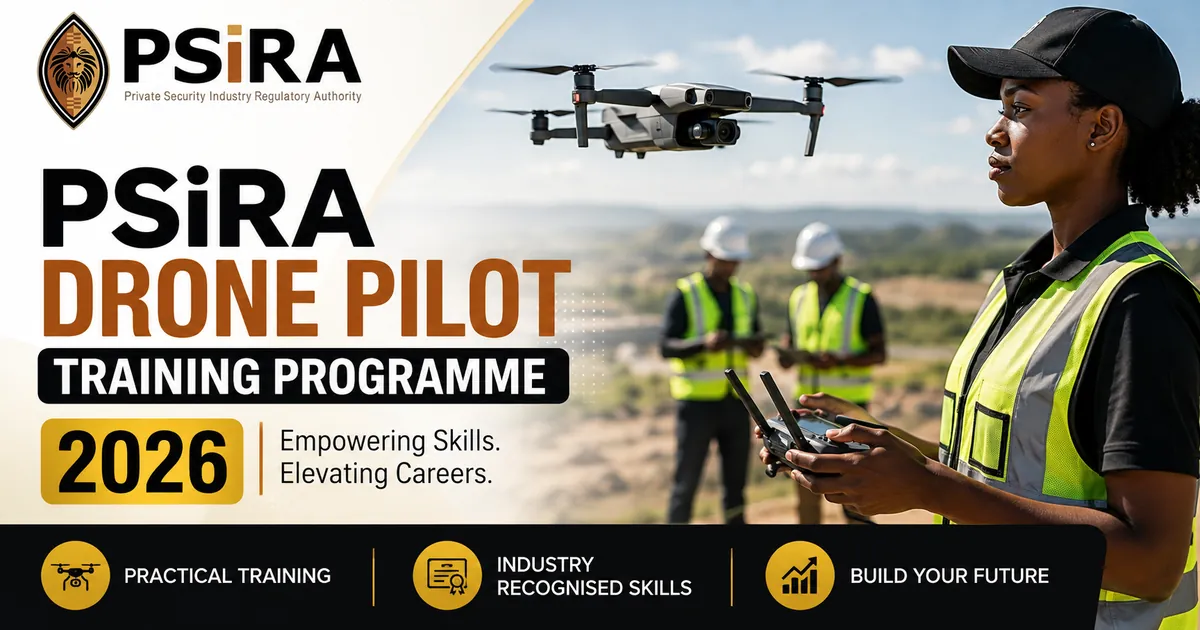
The PSiRA Drone Pilot Training Programme 2026 offers South African women a unique opportunity to enter one of the country’s fastest-growing technology sectors. Through this fully funded skills development programme, the Private Security Industry Regulatory Authority (PSiRA) aims to equip eligible women with practical drone pilot skills that are increasingly required across industries such as security, mining, agriculture, infrastructure inspection, logistics, environmental monitoring, emergency services, and construction.
As drone technology continues to transform businesses and government operations, qualified drone pilots are becoming highly sought-after professionals. If you are passionate about technology, aviation, innovation, and career development, this programme could be the perfect stepping stone toward a rewarding future.
Whether you recently completed Matric or are unemployed and looking to improve your employability, the PSiRA Drone Pilot Skills Training Programme provides valuable industry exposure without charging tuition fees.
Programme Overview
| Programme Information | Details |
|---|---|
| Programme | PSiRA Drone Pilot Skills Training Programme 2026 |
| Host | Private Security Industry Regulatory Authority (PSiRA) |
| Programme Type | Fully Funded Skills Training |
| Duration | 6–8 Weeks |
| Location | South Africa |
| Who Can Apply | Female South African Citizens |
| Age Requirement | 18–40 Years |
| Qualification | Matric Certificate |
| Closing Date | 14 August 2026 |
Important: Applicants who have already submitted an application do not need to apply again.
About the PSiRA Drone Pilot Training Programme 2026
Drone technology has rapidly evolved from a niche aviation skill into an essential tool used across numerous industries. Today, drones are helping businesses improve productivity, reduce operational costs, enhance workplace safety, and collect valuable aerial data.
Recognising these growing opportunities, PSiRA has launched this specialised training programme to empower South African women with practical drone operating skills.
Successful candidates will receive structured training covering both theoretical knowledge and practical drone operations.
The programme aims to prepare participants for employment opportunities in South Africa’s expanding drone industry.
Why Drone Pilots Are in High Demand
South Africa continues investing in digital transformation across public and private sectors.
Drone pilots are now employed in:
- Security surveillance
- Mining operations
- Agriculture
- Construction
- Infrastructure inspections
- Utility maintenance
- Environmental monitoring
- Disaster management
- Emergency response
- Logistics
- Photography
- Surveying
- Mapping
- Insurance inspections
As businesses increasingly adopt unmanned aerial systems (UAS), qualified operators become valuable assets across multiple sectors.
What You Will Learn
During the programme participants may receive training in:
- Drone flight operations
- Aviation regulations
- Flight planning
- Drone safety procedures
- Risk management
- Airspace awareness
- Equipment maintenance
- Practical flying exercises
- Mission planning
- Emergency procedures
- Data collection
- Professional conduct
These practical skills provide a strong foundation for entering the commercial drone industry.
Minimum Requirements
Applicants must meet the following criteria:
- Be a South African citizen
- Female applicant
- Between 18 and 40 years old
- Hold a Matric Certificate
- Obtain at least 50% in English
- Passionate about technology
- Good health
- Registered with PSiRA
- PSiRA status must be in good standing
Applicants who fail to meet the requirements may not be shortlisted.
Required Documents
Prepare the following documents before applying:
- Completed application form
- Updated CV
- Certified South African ID copy
- Certified Matric Certificate
- Copy of PSiRA Certificate
Ensure all documents are certified and clearly readable.
Incomplete applications may not be considered.
Important Programme Information
Applicants should note the following:
- No stipend will be paid
- Internet data will not be provided
- Applicants require reliable internet for online theory
- Training dates will be communicated later
- Successful applicants must complete an Aviation Class III Medical Examination
- Accommodation will be provided
- Transport to the training facility will be provided
These benefits significantly reduce the financial burden associated with specialised aviation training.
Estimated Earnings After Qualification
Although the PSiRA Drone Pilot Training Programme does not offer a stipend during training, completing the programme can improve access to paid employment in the drone industry.
Estimated salaries vary depending on employer, experience, certifications, and industry:
| Position | Estimated Monthly Salary |
|---|---|
| Junior Drone Pilot | R12,000 – R20,000 |
| Commercial Drone Operator | R20,000 – R35,000 |
| Mining Drone Specialist | R30,000 – R50,000+ |
| Infrastructure Inspection Pilot | R25,000 – R45,000 |
| Surveying & Mapping Drone Pilot | R28,000 – R55,000 |
| Freelance Drone Pilot | Income varies by contracts |
Highly experienced drone pilots with specialised aviation certifications may earn significantly more, especially within mining, engineering, security, and infrastructure sectors.
Employee Benefits (Where Applicable)
Although trainees do not receive employment benefits during the programme, employers hiring qualified drone pilots may offer:
- Medical Aid
- Pension Fund
- Group Life Insurance
- Disability Cover
- Paid Leave
- Annual Bonuses
- Employee Wellness Programmes
- Performance Incentives
- Continuous Skills Training
- Professional Development Opportunities
Benefits vary depending on the employer.
Career Growth Opportunities
The drone industry offers numerous pathways into higher-paying technical careers.
Possible career progression includes:
- Commercial Drone Pilot
- Drone Operations Supervisor
- UAV Instructor
- Flight Operations Manager
- Aviation Safety Officer
- Security Technology Specialist
- Mining Drone Operator
- Agricultural Drone Specialist
- Infrastructure Inspection Specialist
- Survey Technician
- GIS Mapping Specialist
- Remote Sensing Analyst
With additional aviation certifications, professionals can specialise in high-demand sectors that offer excellent earning potential.
Transferable Skills Employers Value
Participants will develop practical skills applicable across many industries.
These include:
- Technical problem-solving
- Aviation safety awareness
- Digital literacy
- Equipment management
- Operational planning
- Risk assessment
- Communication
- Observation skills
- Teamwork
- Professional responsibility
- Time management
- Technology adoption
These competencies are valuable in engineering, logistics management, security operations, project management, and technology careers.
Industry Outlook in South Africa
The South African drone sector continues to expand as organisations embrace automation and digital technologies.
Growing demand is being driven by:
- Infrastructure development
- Renewable energy projects
- Precision agriculture
- Mining innovation
- Security technology
- Environmental conservation
- Smart cities
- Logistics optimisation
Drone technology also supports Artificial Intelligence, Data Analytics, and digital mapping by collecting accurate aerial information that organisations use to improve decision-making.
As drone regulations mature, demand for certified operators is expected to continue growing.
Professional Development Opportunities
After completing this programme, candidates can further strengthen their qualifications through:
Aviation Qualifications
- Remote Pilot Licence (RPL)
- Civil Aviation compliance training
- Aviation safety courses
Technology Skills
- Geographic Information Systems (GIS)
- Drone Mapping
- Remote Sensing
- Artificial Intelligence applications
- Data Analytics
- Drone maintenance
Higher Education
Relevant studies include:
- Engineering
- Information Technology
- Aviation Management
- Logistics Management
- Project Management
- Business Administration
Students may also explore TVET Colleges, universities, online courses, learnerships, graduate programmes, and internships that complement drone technology careers.
Who Should Apply?
This programme is ideal for:
- Unemployed women
- Recent Matric graduates
- Technology enthusiasts
- Individuals interested in aviation
- Women seeking practical technical skills
- Career changers
- Future entrepreneurs in drone services
Why This Opportunity Matters
Specialised aviation training is often expensive and inaccessible.
The PSiRA Drone Pilot Skills Training Programme removes many financial barriers by covering:
- Training costs
- Accommodation
- Transport to the training facility
This enables more South African women to access emerging technology careers without paying substantial tuition fees.
How to Apply
Eligible candidates should complete the official application form and submit all required supporting documents before the closing date.
Required documents include:
- Completed application form
- Updated CV
- Certified South African ID
- Certified Matric Certificate
- Copy of PSiRA Certificate
Apply PSiRA Drone Pilot Training Programme 2026
Final Thoughts
The PSiRA Drone Pilot Training Programme 2026 is more than a short skills course—it is a gateway into one of South Africa’s fastest-growing technology fields. With fully funded training, accommodation and transport provided, successful participants can acquire practical aviation skills that are increasingly valued across security, mining, agriculture, engineering, infrastructure, and environmental sectors.
Although there is no training stipend, the long-term career prospects and earning potential for qualified drone pilots make this an excellent investment in your future. If you meet the eligibility requirements and are passionate about technology, don’t miss this opportunity to build specialised skills and position yourself for emerging career opportunities.